Cat6 vs. Cat6a for New Construction: What We Actually Spec, and Why
· Erik Short
Quick answers
Cat6 or Cat6a for new construction? Cat6 handles 1G everywhere and 10G up to 55 meters, so it's still the right default for most office and retail buildouts; Cat6a earns its cost on long runs, dense PoE bundles, and buildings where 10G to the desk is a real plan rather than a maybe.
How far does Cat6 run for 10G? Roughly 55 meters under good conditions, and less in large, tightly packed bundles — Cat6a is the only twisted-pair category rated for the full 100 meters at 10G.
Is Cat6a worth the extra money? The cable and jacks cost noticeably more and the labor is slower because of the bigger diameter and stiffer jacket, but on a run you'll never pull again, that delta is small compared to re-cabling later.
Does PoE change the answer? Yes — high-wattage PoE++ devices heat the bundle, and Cat6a's larger conductors and better construction shed that heat and voltage drop better than Cat6.
What do you spec most often? Cat6 for general office and retail drops, Cat6a for camera and wireless access point runs, long warehouse pulls, and anywhere imaging or medical equipment lives.
If you're a GC or an owner sitting in a design meeting and someone asks "Cat6 or Cat6a?", the honest answer is: it depends on the run, and you probably need both. Anyone who gives you a single-word answer without asking about building size, ceiling height, or what's hanging off the far end of the cable is guessing.
Here's how we think about it on real Treasure Valley jobs, and what we actually put on a plan.
The short comparison
| Cat6 | Cat6a | |
|---|---|---|
| 1G Ethernet | 100 m | 100 m |
| 10G Ethernet | ~55 m (less in big bundles) | 100 m |
| Bandwidth | 250 MHz | 500 MHz |
| Outside diameter | Smaller, more flexible | Larger, stiffer |
| Alien crosstalk | Not specified | Tested and specified |
| PoE heat handling | Fine at moderate loads | Better in dense, high-wattage bundles |
| Conduit/tray fill | More cables per path | Fewer — plan pathways bigger |
| Material cost | Lower | Higher |
| Labor | Faster pulls, easier terminations | Slower pulls, bulkier terminations |
| Best fit | Office and retail drops, short-to-medium runs | Long runs, camera/AP backbone, high-PoE, 10G plans |
What actually separates the two
Both categories run gigabit to 100 meters. That's the part people miss. If your entire building is 1G to the desk — and for most offices it is, and will be for years — Cat6 does the job everywhere the code allows a horizontal run.
The differences that matter in the field are three:
1. 10G distance. Cat6 will do 10 gigabit, but only about 55 meters, and that number assumes decent installation conditions. Cat6a is specified for 10G across the full 100-meter channel. If 10G to a specific location is a requirement, and the run is long, the decision is already made.
2. Alien crosstalk. This is the real engineering reason Cat6a exists. When you bundle dozens of cables together and push 10G, signal bleeds between adjacent cables. Cat6a is tested and specified for that; Cat6 isn't. It shows up as a problem in big, tight bundles — exactly what you get in a 200-drop office where everything funnels into one IDF.
3. Physical size. Cat6a is fatter and stiffer. That sounds trivial until you're filling a 4-inch sleeve through a rated wall, or the electrician sized the J-hooks and conduit off a Cat6 assumption. Cat6a means bigger pathways, and pathways are a construction decision, not a wiring decision. Get it wrong in design and someone eats a change order.
PoE is the factor nobody puts on the plan
This is where I push back hardest on "just run Cat6 everywhere."
Ten years ago a network drop carried data and maybe 15 watts. Today the drops we care about most carry power: cameras with heaters and IR, wireless access points, digital signage, PoE lighting, intercom stations, VoIP. High-wattage PoE pushes real current through all four pairs, and current makes heat. Heat in the middle of a tightly bundled 48-cable run in a plenum ceiling raises insertion loss, which shortens your effective distance and, at the extreme, cooks the jacket rating you paid for.
Two things follow from that:
- Bundle size matters. Standards bodies publish derating guidance for large bundles under PoE load. The practical version: keep PoE bundles reasonable, don't cinch them into a solid brick with tight zip ties, and give them air. We bundle in groups and use velcro, not because it looks nicer in photos, but because it doesn't crush geometry or trap heat.
- Bigger copper is better copper. Cat6a's larger conductors carry PoE with less voltage drop and dissipate heat better. On a 90-meter camera run feeding a device with a heater in a Nampa warehouse in January, that's not theoretical.
So even on jobs where we spec Cat6 for workstations, we'll often spec Cat6a for the camera and AP layer. Those runs are the long ones, they're the ones under continuous power load, and they're the ones nobody ever wants to pull again because they end 24 feet up. If you're planning that layer, our writeup on how many cameras a warehouse actually needs is a decent starting point for count and placement before you count drops.
10G to the desk: let's be honest
Vendors love this argument. Here's my read from actually commissioning networks.
Who genuinely needs 10G at the outlet:
- Video production, 3D/rendering, large-format CAD with big shared file sets
- Medical imaging — radiology, some dental and ortho workflows moving large studies
- Engineering and architecture firms hitting a local NAS hard
- A workstation feeding a high-bit-rate live production or broadcast setup
Who almost certainly never will:
- General office, accounting, legal, insurance, property management
- Retail POS and back office
- Warehouse handhelds, printers, time clocks, scales
- Anything whose bottleneck is the internet circuit, which is nearly everyone
If your team's work lives in a browser and a cloud file service, the constraint is your ISP handoff and your Wi-Fi, not the copper. Upgrading a 1G desk to 10G changes nothing for a user opening spreadsheets in a browser tab. I'd rather spend that money on more access points, a real UPS in the IDF, and fiber between IDFs.
Which brings up the actual best-value move in most buildings: run fiber between telecom rooms, and be generous about it. Multimode OM4 or single-mode between IDFs and the MDF costs comparatively little at rough-in and gives you a decade-plus of headroom for uplinks. Copper distance limits go away, 10G/25G/40G uplinks become a switch purchase instead of a construction project, and you've solved the problem 10G-to-the-desk was pretending to solve.
Plenum, riser, and the code side
Two separate decisions people conflate: category and jacket.
- Plenum (CMP) is required where the cable runs through an environmental air-handling space — most commonly a ceiling used as a return air plenum. It costs more and is stiffer.
- Riser (CMR) is for vertical runs between floors in a shaft.
- CM/CMG covers general purpose.
You choose jacket by where the cable runs, and category by what's on the end of it. Cat6a plenum is the most expensive and the most annoying combination to install, so it's worth knowing your ceiling type early. In Treasure Valley tenant improvements I see a lot of ducted return above the grid, which means we don't need plenum — but that's an engineering determination, not a guess, and the AHJ and mechanical drawings settle it, not me.
Also: firestop and pathway penetrations. This is where mixed-category jobs get expensive after the fact. If your design has Cat6a in the mix, size sleeves and cable tray for the bigger diameter from the start.
The cost delta, in the terms a GC cares about
Roughly, and without inventing numbers I can't back up:
- Material: Cat6a cable, jacks, and patch panels cost meaningfully more than Cat6 — the box of cable is the biggest single line, and plenum widens the gap.
- Labor: slower. Bigger, stiffer cable means fewer per pull, more effort through tight framing, and terminations that take longer, especially with shielded systems.
- Pathway: larger sleeves, more tray, and lower fill counts. Sometimes an extra sleeve or a wider tray run.
- Testing: certification testing to Cat6a parameters takes a bit longer per drop.
Put together, going from all-Cat6 to all-Cat6a on a mid-size office typically lands as a noticeable but not shocking bump on the low-voltage line. Compare that to what it costs to open finished ceilings and walls in an occupied building later, and the math is easy where the cable is hard to reach — and much less compelling for a desk drop above an accessible grid ceiling you can reach with a ladder in ten minutes.
That's the real framework: spend the upgrade money where the cable is expensive to replace, not where it's cheap.
What we actually spec, by building type
Professional office / general commercial TI
Cat6 for workstation and conference drops. Cat6a for ceiling-mounted access points and cameras. Fiber between the MDF and any secondary IDF. Two drops per workstation position minimum, and a couple of spares to every conference room — the number of times a room later needs a display, a codec, a table box, and a control device is basically all of them. Our structured cabling work on TIs is mostly this pattern.
Warehouse / distribution / industrial
Cat6a as the default. Runs are long, ceilings are high, everything on the end is PoE — cameras, APs, horns, hardened switches. The cost of a lift and two techs to redo a run 30 feet up dwarfs the cable delta. We also plan intermediate enclosures rather than fighting 100-meter limits from one room, and pull fiber to them.
Medical / dental / imaging
Cat6a to imaging, back office, and anywhere large studies move. Cat6 is fine for reception, exam-room workstations, and printers, but budgets here usually allow the whole-building Cat6a decision, and the equipment refresh cycle rewards it. Plan for more drops than the equipment list shows — practices add chairs, panoramic units, and check-in kiosks constantly.
Retail
Cat6 for POS and back office. Cat6a for the camera layer, because that's the layer that gets scrutinized after a loss and the layer you can't easily get back to once the ceiling and merchandising are done. If cameras are a big part of your project, what commercial camera installation actually costs in Boise breaks down where the money goes.
Church / school / assembly
Mixed. Cat6a to AV positions, cameras, and APs; Cat6 for offices and classrooms. These buildings have long runs and big ceilings, and the AV loads keep growing.
Three things that matter more than the category
- Drop count. I have never once heard "we ran too many drops." I hear the opposite weekly. Spare drops at rough-in cost a fraction of what they cost later.
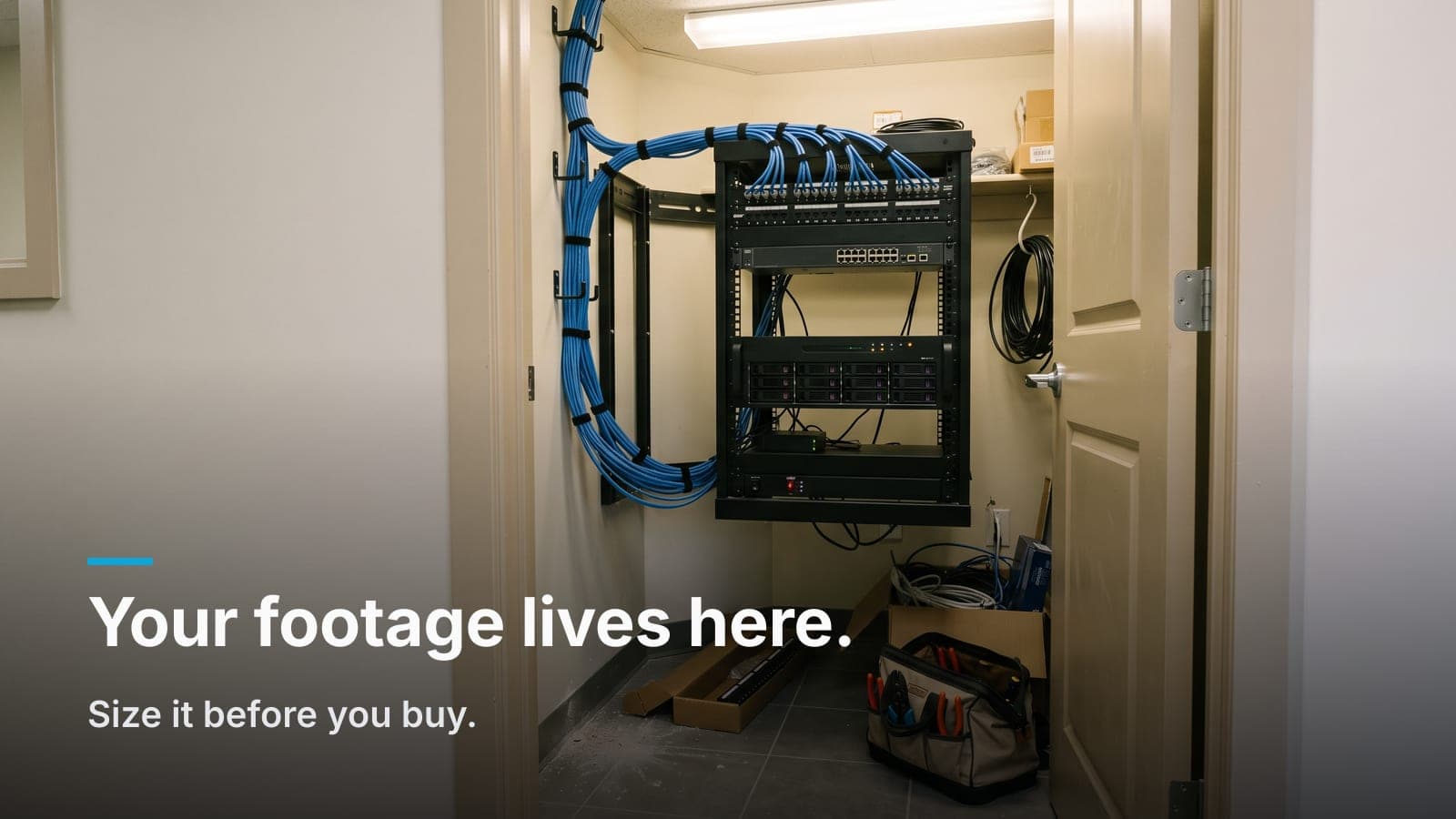
- Telecom room design. A real room or closet with power, cooling, ground, and space to work. Not a shelf above a toilet. Half the messy networks I inherit are just rooms that were never sized.
- Certification testing and labeling. Every drop tested with a real certifier, results delivered, both ends labeled to a scheme. Without that documentation you don't have a structured cabling system, you have a pile of cable.
Get those three right with plain Cat6 and you'll have a better building than someone who ran Cat6a everywhere and terminated it badly.
Frequently asked questions
Can I mix Cat6 and Cat6a in the same building?
Yes, and most well-designed buildings do. The important thing is that each channel is consistent end to end — Cat6a cable terminated on Cat6 jacks and patch cords performs as Cat6, so match the components on any run you're calling Cat6a.
Do I need shielded (F/UTP or STP) Cat6a?
Usually not in a typical commercial building. Unshielded Cat6a performs fine in most environments; shielded systems make sense near heavy industrial equipment, large VFDs, or specific interference problems, and they require proper bonding and grounding to work as intended. Shielded also adds labor.
What about Cat7 or Cat8?
Skip them for horizontal cabling in commercial buildings. Cat8 is a short-reach data center specification, and Cat7 was never adopted in the North American standards the way Cat6a was. If you need more than Cat6a, you need fiber.
How do I keep the low-voltage rough-in from colliding with the other trades?
Get the cabling contractor into coordination early, before the ceiling grid layout and pathway sizing are locked. The two most common collisions we see are undersized sleeves and J-hook layouts that assumed a smaller cable diameter than what got specified.
Should I run fiber to the desk instead?
For nearly all commercial work, no. Copper with PoE is what powers phones, APs, and cameras, and fiber to the desk means active hardware at every outlet. Fiber belongs between telecom rooms and to remote buildings or outbuildings.
We're doing a tenant improvement in an occupied building — does the answer change?
It shifts toward Cat6a in anything hard to access, because the labor to get back into a finished, occupied space is the expensive part. In accessible-grid-ceiling office space, Cat6 with plenty of spare drops is still the value play.
If you're in the design phase on a Boise-area building and want a second set of eyes on the low-voltage plan, we'll walk the site and give you a fixed quote before the ceiling goes up.